AP HUMAN GEOGRAPHY
  • Home
  • About
  • Contact
  • Tips For Succes
  • UNIT 1
    • ESPN Model
    • Question of WHERE? >
      • Blog
    • Interpreting Data
    • Distribution
    • Mapping Skills & Geographic Tools >
      • Map Test Review
      • Cool Geographic Tools
      • Latitude and Longitude
      • Map Projections
      • Types of Maps
      • The Big Picture: The Continents and Oceans
    • Thinking About Place >
      • Telling Time Zones
      • Site and Situation of a Place
      • Location of a Place
    • Regions >
      • Exploring Physical Regions
      • Exploring Cultural Regions
      • Human Environment Interaction
      • Environmental Determinism vs. Possibilism
    • Thinking About Scales >
      • Differentiating Scales
      • Globalization
    • Thinking About Connections >
      • Spatial Interactions
      • Diffusion
    • UNIT 1 Review >
      • UNIT 1 Vocabulary
      • UNIT 1 Topics & FRQs
  • UNIT 2
    • Where Is The World's Population Distributed? >
      • Population Density and Resources
      • Population Density
      • Comparison Activity: Population Density and Climate
      • Climate Zones Review
    • Demography and Where Has The World's Population Increase? >
      • 7 Billion and Counting
      • Birth Rates and Death Rates: Population Increase
      • Standard of Living: MDCs vs. LDCs
      • Human Development Index >
        • Human Development Index Project
    • Why Is Population Increasing At Different Rates In Different Countries? >
      • How To Read A Population Pyramid
      • How To Interpret A Population Pyramid
      • Population Pyramid Activity Assessment
    • Population Policies >
      • Lost China Girls Replacement Activity
    • Why Do People Migrate? >
      • Push & Pull Factors
      • Intervening Obstacles
      • Characteristics of Migrants
    • Where Are Migrants Distributed? >
      • Great Migrations Voicemail Project
    • Why Do Migrants Face Obstacles? >
      • Immigration Policies of Host Countries
      • Immigration Issues Today
    • UNIT 2 Review >
      • UNIT 2 Vocabulary
      • UNIT 2 Topics & FRQs
  • UNIT 3
    • Folk vs. Popular
    • Cultural Divergence & Convergence
    • Why Is Folk Culture Clustered? >
      • Isolation Creates Diversity
      • Influence Of The Physical Environment
    • Why Is Popular Culture Widely Distributed? >
      • Diffusion Of Popular Culture >
        • Diffusion Of Culture Through Media
        • Threat To Folk Culture
    • Where Are English Language Speakers Distributed? >
      • Origin and Diffusion Of English >
        • English Colonies
      • Dialects Of British English
      • British English vs. American English
      • US English Dialects
    • Classification Of Languages & Diffusion
    • Why Do People Perserve Local Languages? >
      • Case Study: Hebrew Language
      • Case Study: Gaelic Language
      • Case Study: Icelandic Language
      • Case Study: Multilingual States
    • Global Dominance Of English >
      • Changing Languages
    • World Religions >
      • World Religions Quick Facts
    • Where Are Religions Distributed? >
      • Religion Bodies Project
      • Diffusion Of Religions
      • Holy Places & Calendars
    • Why Do Religions Organize Space In Patterns? >
      • Disposing Of The Dead
      • Religious Settlements
      • Administration Of Religious Spaces
    • Religious Conflicts >
      • Religion vs. Government
      • National Geographic Assignment >
        • Arab-Israeli Conflict
        • Northern Ireland Conflict
        • Tibet Conflict
        • Nigerian Conflict
    • US Ethnicities Distribution >
      • Concentrations Of Ethnicities In The US
      • African American Migration Flows
    • Differentiating Between Race & Ethnicity >
      • Apartheid In South Africa
    • Why Do Ethnicities Clash? >
      • Ethnic Cleansing >
        • Modern Ethnic Conflicts
    • UNIT 3 Review >
      • UNIT 3 Vocabulary
      • UNIT 3 Topics & FRQS
  • UNIT 4
    • Where Are States Located? >
      • Types Of Government Systems
      • Problems Defining States
      • Varying Sizes Of States
    • Development Of State Concept >
      • Colonies >
        • Colonial Practices
    • Where Are Boundaries Drawn Between States?
    • Why Do Boundaries Create Conflict Between States? >
      • Turmoil In The Caucasus Region
      • Stateless Nations
    • Supranational Organizations: EU & UN >
      • NATO & NAFTA
      • OPEC & WTO
      • Latin American Union Project
    • Unit 4 Review >
      • UNIT 4 Vocabulary
      • UNIT 4 Topics & FRQs
  • UNIT 5
    • Where Are Agricultural Regions In LDCs? >
      • Shifting Cultivation
      • Pastoral Nomadism
      • Intensive Subsistence Agriculture
      • Agriculture in LDCs Thinking Questions
    • Where Are Agricultural Regions In MDCs? >
      • Mixed Crop & Livestock
      • Dairy Farming
      • Grain Farming
      • Livestock Ranching
      • Mediterranean Agriculture
      • Commerical Gardening & Fruit Farming
      • Plantations
      • Agriculture In MDCs Thinking Questions
    • Von Thunen Model
    • Hungry Earth: World Food Crisis >
      • Green Revolution
      • Future Of Foods
      • World Food Resources
      • Hunger Games Project
    • Sustainable Agriculture >
      • Dangers Of Non-Sustainable Agriculture
      • Sustainable Agriculture >
        • Saving The Rainforest
    • Eat More Chicken? Beef? or Pork?
    • UNIT 5: Review >
      • UNIT 5 Vocabulary
      • UNIT 5 Topics & FRQs
  • UNIT 6
    • Economic Systems
    • Economic Indicators >
      • Economic Activities
      • Productivity
      • Raw Materials
      • Consumer Goods
    • Social Indicators
    • Demographic Indicators
    • LDCs Face Development Obstacles >
      • How Countries Develop
      • Distribution of MDCs and LDCs >
        • Categorizing Development
        • Interpreting Demographic Data >
          • Levels Of Development Activity 1
          • Levels Of Development Activity 2
          • Levels Of Development Exploration
    • Origins Of Industry
    • Where Is Industry Distributed? >
      • North America Industrial Regions >
        • Maquiladoras Case Study
      • East Asia Industrial Regions
    • Development Theories And Models >
      • Least Cost Theory
    • Industrial Problems >
      • Industrial Poster
    • Why Do Industries Face Problems? >
      • Industrial Problems In MDCs & LDCs
    • UNIT 6 Review >
      • UNIT 6 Vocabulary
      • UNIT 6 Topics & FRQs
  • UNIT 7
    • World Cities
    • Topograpy & Settlements >
      • How Do Resources Influence Settlements?
      • How Do Man-Made Features Influence Settlements?
    • Origin Of Cities
    • Where Did Services Originate? >
      • Origin Of Services
      • Services In Rural Settlements
    • Consumer Service Patterns >
      • Market Area Analysis
      • Rank Size Rule
      • Economic Base Of Settlements
    • Why Do Services Cluster In Downtown?
    • Outside The CBD
    • Why Do Cities Have Problems? >
      • Cause & Effect Practice
    • Inner City Problems
    • Where Are People In Cities? >
      • Concentric Zone Model
      • Sector Model
      • Multiple Nuclei Model
      • Peripheral Model
      • Latin American Urban Model
      • African Urban Model
      • Asian Urban Model
    • UNIT 7 Review >
      • UNIT 7 Vocabulary
      • UNIT 7 Topics & FRQs
  • AP REVIEW
    • Notable Geographers
    • Key Concepts In APHG
    • Decoding APHG
    • FRQ Tips
    • Online Reviews
    • Around The World Reviews
    • Predict Your APHG Exam Score

Prior to the invention of the locomotive (train) and the automobile, people primarily traveled by ship across waterways. Therefore, it was very important to build your city along a river or coastline, not only for easier farming, but also for easy access to trade routes. However, once cars and trains became common, travel across mountains, deserts, and other less hospitable areas became much more accessible.
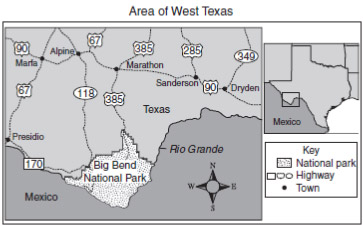
Image of a section of west Texas that displays the cities of Presidio, Marfa, Alpine, Marathon, Sanderson, Dryden, and Big Bend National Park. The state highways in the area are also displayed.
Source: Area of West Texas, Released Exit level TAKS Social Studies April 2009,
Texas Education Agency.
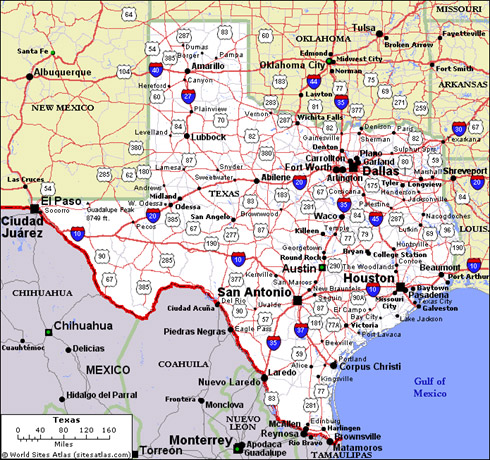
Image of a map of Texas that is labeled by the Texas Highways and major cities.
Source: Texas State Map, Top 50 States.

Looking at the inset map above, you will notice that major cities have developed along the junction of two or more highways. In fact, you will notice that none of these towns are situated along a major river at all. While water is still important for survival, it became less important for travel allowing settlers to have more choices for urbanization.

As urbanization increased, manmade features such as highways, bridges, and railroads were created to facilitate transportation and movement of goods and ideas between cities and outlying areas. Manmade features are important to locations where natural features and resources are limited.

Visit this link and click on “Map” to make the manmade features such as highways visible. (Click labels and photos for more information to be displayed).

  • Describe the manmade features in your hometown.
  • Explain how these features affect urbanization in your area.
  • Describe which features you think have a greater impact in your area: natural features or manmade features? Explain your answer.


Powered by Create your own unique website with customizable templates.